Reviewing Christmas Deer Embroidery Teardrop3
As a designer who spends half my life staring at digitized patterns and the other half pulling bobbins out of jammed machines, I have learned to be skeptical of digital assets. We see thousands of machine embroidery design files pass through our screens, but few hold up when the needle actually hits the fabric. Today, I am taking a close look at Christmas Deer Embroidery Teardrop3, not just as a pretty picture on a website, but as a functional component for real-world embroidery project workflows.
This is not a standard vector file or an applique design with pre-programmed stitch paths. It is a high-resolution graphic asset, specifically a PNG with a transparent background. For those of us in the craft business, understanding the distinction between a stitched file and a Print Templates style graphic is crucial. This review focuses on how this specific graphic translates into tangible value for Etsy seller shops, boutique branding, and custom merchandise.
First Impressions: Mood and Visual Personality
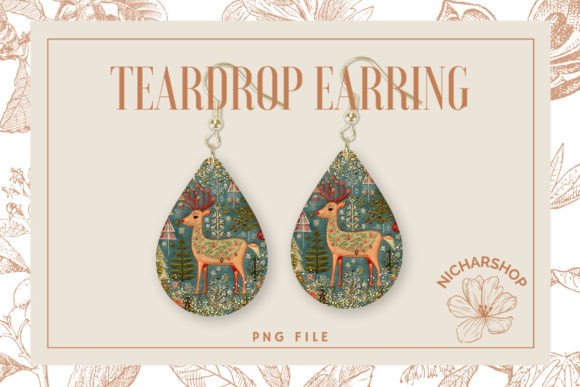
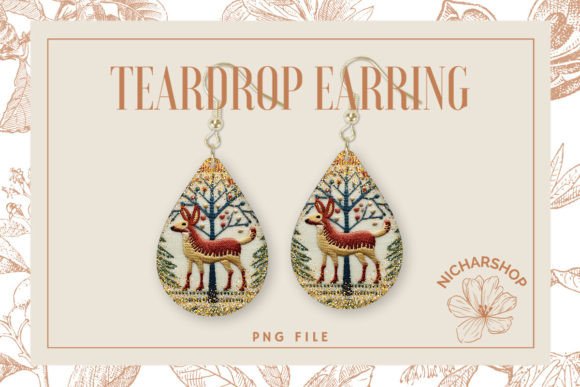
The first thing that strikes me about Christmas Deer Embroidery Teardrop3 is its silhouette. The teardrop shape suggests a pendant or an ornament aesthetic, which immediately cues a sense of holiday nostalgia. It feels less like a loud, commercial advertisement and more like a quiet, cozy winter moment. The deer motif is classic, but the framing gives it a refined edge suitable for modern home decor or understated custom apparel.
When I load the 300 DPI PNG into my design software, the transparency is clean. There are no jagged white halos around the edges, which is often the downfall of lower-quality design assets. This cleanliness is vital if you plan to layer this graphic over textured backgrounds in your printable mockup presentations. The resolution is sharp enough that even when zoomed in to check for pixelation, the lines remain crisp. For a Graphics product intended for high-quality output, this baseline technical quality is non-negotiable.
Real-World Application: From Screen to Stitch
Let’s talk about how this actually works in a production environment. Since this is a PNG and not a native embroidery file, you cannot simply send it to your machine. However, its primary strength lies in visualization and hybrid production methods. Imagine you are preparing a run of heavy cotton tote bags for a holiday market. You want to offer a tote bag design that looks embroidered but requires quick turnaround.
In this scenario, Christmas Deer Embroidery Teardrop3 serves as the perfect master image for direct-to-garment printing that mimics embroidery, or as a reference for manual digitizing. If you are a digitizer, this high-res image allows you to trace accurate satin stitch borders and plan your fill stitch directions without guessing at the proportions. The clear definition of the deer’s antlers and the teardrop border helps in determining where to place running stitch underlays to prevent puckering on stretchy fabrics.
For small shop product creators who do not own industrial embroidery machines, this graphic is a goldmine for creating finished product photos. You can overlay this transparent PNG onto photos of blank sweatshirts or pillows to create realistic printable mockup listings. This saves hours of physical sampling time. When a customer sees a sweatshirt embroidery preview that looks authentic, their trust in your brand increases. They perceive the item as a high-value personalized gift rather than a mass-produced commodity.
Navigating Fabric and Technical Constraints
While the graphic is versatile, applying it to physical goods requires careful consideration of material. If you are using this image as a guide to create a true embroidery file, pay attention to the density. The teardrop shape has curves that can be tricky on curved surfaces like caps or hats. If the stitch density is too high in the center of the deer’s body, you risk creating a stiff, cardboard-like feel on soft fabrics like baby clothes.
For baby embroidery projects, I recommend simplifying the internal details. The high resolution of the PNG allows you to see exactly which elements can be removed without losing the recognizability of the deer. On dark fabrics, ensure your thread colors have enough contrast. A common mistake is using mid-tone greens or reds on navy or black fleece; the design gets lost. Use this graphic to test color combinations digitally before threading up your machine.
Also, consider the hoop size. The teardrop format is vertically oriented. This fits beautifully on the chest of a jacket or the corner of a kitchen towel, but it might be too tall for small 4x4 hoops if you want significant detail. Always measure your actual hoop capacity against the dimensions of the PNG before committing to a purchase or production run. If you are working with textured fabrics like linen or waffle knit, the smooth lines of this graphic provide a nice visual counterpoint, but you must use a cut-away stabilizer to keep the stitches from sinking into the weave.
Commercial Value and Brand Consistency
For commercial embroidery professionals, consistency is key. Using a high-quality source image like Christmas Deer Embroidery Teardrop3 ensures that every mockup, social media post, and catalog entry looks professional. It elevates the perceived value of your handmade product. When customers browse an online store, they are buying the image as much as the item. A blurry or poorly cropped graphic signals low effort; a crisp, transparent PNG signals professionalism.
This asset also works well for holiday embroidery collections. If you are building a cohesive line of winter goods, the teardrop shape can be repeated across different items—patches, aprons, and pillow covers—creating a recognizable brand signature. It is subtle enough to appeal to adults who want festive decor without the kitsch, making it a strong seller for boutique markets.
Practical Designer Notes
Before you integrate this into your workflow, here are my top recommendations:
- Test on Scrap Fabric: If digitizing from this PNG, always stitch out a test on the same fabric weight you intend to sell. Check for puckering and thread breaks.
- Check Color Contrast: Use the PNG to create black-and-white versions of your mockups. If the design disappears in grayscale, it will likely lack impact in real life.
- Verify Licensing: The product description notes this is a digital download for graphics. Confirm whether the license allows for commercial use of the finished product if you are selling physical items featuring this design.
- Monitor Calibration: Remember that colors will vary depending on monitor settings. Do not rely solely on the screen preview for thread matching. Use a physical thread chart alongside the digital image.
- Inspect Details: Zoom in to 100% to check the edges of the deer’s antlers. Ensure your digitizing software captures these fine points accurately without creating excessive jump stitches.
In conclusion, Christmas Deer Embroidery Teardrop3 is a solid, professional-grade graphic asset. It bridges the gap between digital design and physical creation, offering flexibility for both digitizers and print-on-demand sellers. By respecting its technical limitations and leveraging its high-resolution clarity, you can create standout small shop product lines that resonate with customers looking for quality and charm this holiday season.