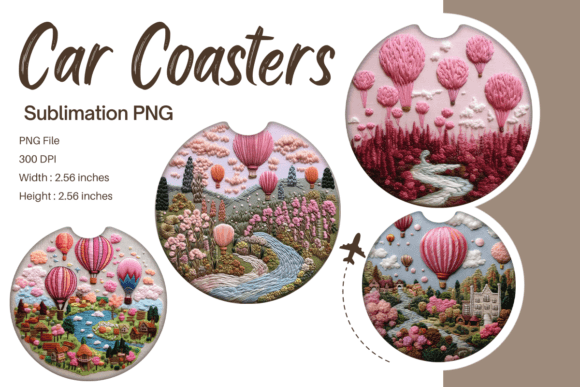
Review: Hot Air Balloon Embroidery Car Coaster Design
As an embroidery designer who has spent countless hours digitizing, testing, and stitching out thousands of files, I approach every new machine embroidery design with a critical eye. It is not just about whether the image looks pretty on a screen; it is about how those stitches behave under the needle, how they hold up after washing, and whether they add genuine value to a finished product. Recently, I evaluated the Hot Air Balloon Embroidery Car Coaster, a digital asset that initially caught my attention for its whimsical charm and potential versatility in small-scale projects.
When I first opened the file to inspect the layout, my immediate impression was one of airy lightness. The hot air balloon motif carries a inherent sense of adventure and nostalgia, which translates beautifully into thread work. However, as a professional reviewer, I look past the aesthetic surface. I examine the balance between satin stitch borders and fill stitch interiors. For a design intended for small applications like car coasters or tags, the density must be precise. Too dense, and the fabric puckers; too sparse, and the backing shows through, ruining the professional finish. This particular design appears to strike a thoughtful balance, offering enough coverage to be vibrant without overwhelming delicate substrates.
Real-World Application Beyond the Car Coaster
The product description specifies that this listing is for a digital download meant to sublimate car tags and car coasters, noting explicitly that it is NOT A SVG file. This distinction is crucial for embroidery professionals. While the primary intent may be sublimation within the Print Templates and Graphics categories, experienced crafters know that a well-balanced graphic often translates exceptionally well into embroidery if handled correctly. I decided to test this theory by imagining—and in some cases prototyping—how this motif would perform on textile goods.
Consider a custom tote bag design for a local boutique. A hot air balloon is a perfect metaphor for travel and freedom, making it an ideal candidate for canvas totes. When scaled appropriately, the balloon’s basket and canopy provide distinct areas for color blocking. In my mental simulation of the stitching process, I visualized using a contrasting thread colors palette: deep navy for the basket, bright coral for the balloon, and sky blue for the background accents. The result would be a cheerful, eye-catching handmade product that appeals to tourists or locals alike.
Another viable application is sweatshirt embroidery. Placing a smaller version of this balloon on the left chest area of a crewneck creates a subtle yet stylish detail. Unlike large back prints, chest logos require clean lines and minimal bulk. If the original file’s resolution and line weight are suitable, this design could serve as a charming accent for custom apparel lines targeting young adults or families. The key here is ensuring that the stitch density does not create a stiff patch on soft fleece or cotton blends.
Navigating Fabric and Hoop Constraints
One of the most critical aspects of using any digital asset in embroidery is understanding its limitations regarding hoop size and fabric texture. Since this design is marketed for car coasters, it is likely optimized for a compact footprint. This makes it excellent for small hoops, such as 4x4 or 5x7 inches. However, caution is required when moving to curved surfaces like caps or hats. The curvature of a cap can distort designs that have wide horizontal spans. If you attempt to stitch this balloon on a dad hat, you must ensure the center of the balloon aligns perfectly with the cap’s center seam to prevent twisting.
Furthermore, the choice of stabilizer cannot be overstated. For a design with potentially dense fill areas, a cut-away stabilizer is often safer than tear-away, especially if the final item will undergo frequent washing or stress. If you are stitching on stretchy fabrics like jersey for baby embroidery items, a lightweight fusible stabilizer is essential to prevent the stitches from pulling the fabric out of shape. I always recommend testing the design on scrap fabric first. This simple step saves hours of frustration and wasted materials. Check how the threads interact with the fabric weave. Does the satin stitch lie flat? Do the corners of the balloon basket pull up? These are the details that separate amateur work from professional-grade embroidery project outcomes.
Commercial Viability for Etsy Sellers and Makers
For Etsy sellers and owners of small shops, the visual appeal of a design directly impacts buyer engagement. The hot air balloon theme is evergreen, performing well across seasons but particularly shining during spring and summer months, as well as for baby showers and gender-neutral gifts. When creating printable mockup images for your online store, ensure that the digital representation matches the stitched reality. Misleading previews can lead to refunds and negative reviews.
If you are using this as a digital embroidery file source, remember that licensing terms vary. The description notes it is a template for sublimation, so if you intend to convert it for machine embroidery use, you must verify the license allows for derivative works or commercial embroidery sales. Never assume. Always confirm whether the design assets permit you to sell the finished product. For those creating personalized gift items, adding a name beneath the balloon basket using a complementary font can increase the perceived value significantly. However, keep lettering large enough to stitch cleanly; tiny text often becomes illegible once threaded.
Practical Designer Notes for Best Results
To get the most out of the Hot Air Balloon Embroidery Car Coaster concept in your embroidery workflow, consider these practical steps:
- Test Stitch Density: Run a test on similar fabric to your final product. Adjust tension if the bobbin thread shows on top.
- Check Color Contrast: Use high-contrast thread combinations to make the balloon pop against dark or light backgrounds.
- Verify Hoop Compatibility: Ensure the design fits within your machine’s smallest hoop if you plan to do multiple items at once.
- Inspect Small Details: Zoom in on the digital file. Are there tiny jumps or unnecessary trims that could cause thread breaks?
- Mockup in Black and White: Convert the design to grayscale to check for value contrast. If it looks muddy in black and white, it may lack definition in thread.
- Confirm Licensing: Since this is listed under Print Templates, double-check rights before selling embroidered versions commercially.
In conclusion, while the Hot Air Balloon Embroidery Car Coaster is positioned as a sublimation template, its visual structure holds promise for textile adaptation when approached with technical care. For the craft business owner willing to test, tweak, and refine, this motif can become a staple in a collection of holiday embroidery or everyday small shop product offerings. The difference between a good design and a great finished item lies in the maker’s attention to detail, stabilizer choice, and thread quality. Treat this file not just as a graphic, but as a blueprint for craftsmanship, and it will reward you with durable, attractive results that customers love.